I get this question almost every week. Sometimes it’s a property manager who just bought a strip center off Nicholasville Road. Sometimes it’s a homeowner in Beaumont who wants the vinyl siding cleaned before a family reunion. Both are asking about pressure washing, but they aren’t asking for the same thing. The equipment is different. The chemicals are different. The scheduling is different. Honestly, the whole approach to the job is different.
After years of running the rig around Fayette County and the counties nearby, I’ve learned that understanding residential vs commercial pressure washing Lexington KY property owners need is the fastest way to avoid overpaying, hiring the wrong crew, or getting your surfaces wrecked. This post walks through the practical differences so you can figure out what your property actually needs before you ever pick up the phone.
Why residential vs commercial pressure washing Lexington KY owners choose matters
Here’s the thing most marketing pages skip over. The words “residential” and “commercial” aren’t only about the type of building. They describe the whole scope of the job, the risk level, and the machinery involved. A contractor set up for house washing might not have the hot water unit needed to lift grease off a restaurant dumpster pad. A crew built for parking garages might show up with equipment that will strip the paint right off your wood deck.
In Central Kentucky we deal with a specific set of conditions. High pollen in spring. Humid summers that grow mildew and algae fast. Limestone dust. Hard water. Clay soil that stains concrete a reddish brown. Those conditions hit residential and commercial properties differently, and they call for different tools. That’s the core of the residential vs commercial pressure washing conversation, and it’s why matching the service to the property saves you money and grief.
When people search for residential vs commercial pressure washing Lexington KY services online, they usually want to know one thing: which one do I need, and what should it cost? So let me break it down category by category, with real numbers and real examples from jobs around town.
Equipment and power: the biggest difference
The machine sitting in the truck bed tells you almost everything about whether a job is set up for residential or commercial work. This is the largest split in the residential vs commercial pressure washing Lexington KY comparison, and it’s where most of the confusion starts.
Residential machines
Residential-focused equipment is built for occasional, controlled use on softer, more delicate surfaces. You’re typically looking at:
- PSI in the 1,200 to 1,500 range for aluminum, stucco, and soft wood, and up to 2,500 to 3,000 PSI for vinyl siding and brick.
- Lighter, more portable frames that one person can move around a yard.
- Thinner vinyl or rubber hoses with plastic or steel couplings.
- Pumps made of plastic or aluminum, which are fine for shorter run times.
The part people miss is this: on a house you almost never want maximum pressure. The right way to clean vinyl siding, wood, painted surfaces, and most brick is with lower pressure and the correct cleaning solution doing the work. If someone shows up and blasts your siding at 3,500 PSI, they can force water behind the panels, etch the surface, or strip the paint. Residential work is about control, not power.
Commercial machines
Commercial equipment is a completely different animal. These units are built to run for hours at a time without overheating, day after day. Expect:
- Industrial gas or high-performance electric motors rated for continuous duty.
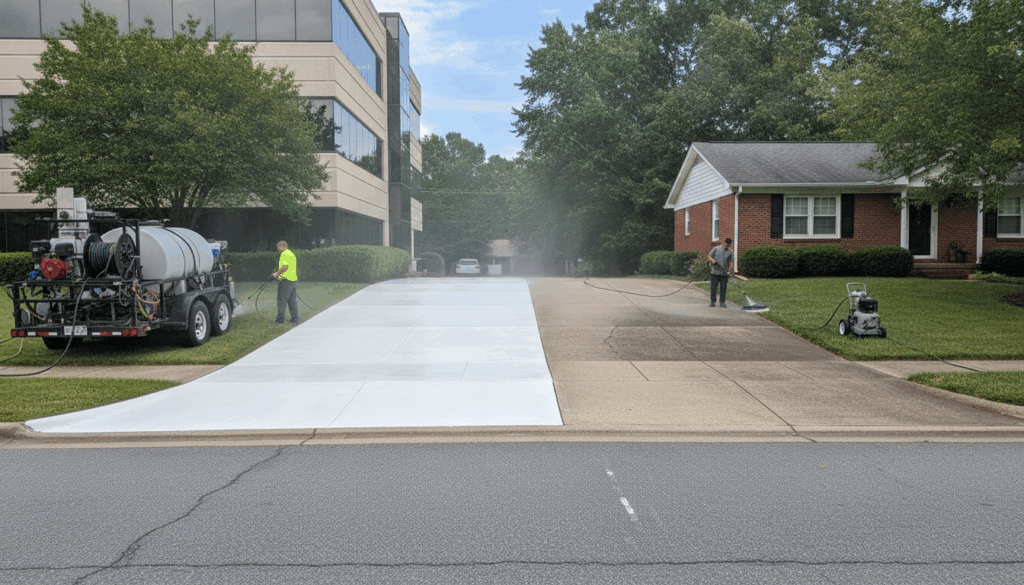
- PSI commonly in the 3,000 to 4,000 range with higher GPM (gallons per minute) flow rates so large areas clean faster.
- Hot water systems. This is the big one for commercial work. Hot water breaks down grease, oil, and heavy contaminants that cold water just smears around.
- Double-braided, wire-reinforced hoses with brass couplings.
- Durable brass pumps with stainless steel valves that hold up under constant use.
That higher GPM number matters more than PSI on big jobs. GPM is what rinses debris away and lets you cover a 40,000 square foot parking lot in a reasonable amount of time. A homeowner-grade unit trying to clean a parking lot would take three days and burn itself out. That’s a big reason residential vs commercial pressure washing Lexington KY property owners weigh really is an equipment question first.
The rule of thumb I give people: residential work is about protecting a surface while you clean it. Commercial work is about moving through a lot of square footage and lifting heavy contaminants. Different goals, different rigs.
Scope and surfaces: what actually gets cleaned
Once you understand the equipment, the surfaces make a lot more sense. The residential vs commercial pressure washing Lexington KY split shows up clearly in what we’re cleaning and what we’re cleaning off of it.
Residential surfaces and contaminants
On the residential side, the goal is protecting your investment and keeping the place looking sharp. Typical work includes:
- House washing on vinyl, brick, wood, fiber cement, and stucco siding.
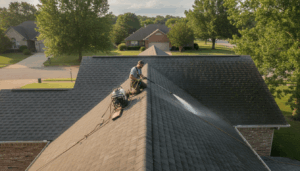
- Roof cleaning, usually the black streaks that are actually algae, using low-pressure soft washing.
- Driveways, sidewalks, and concrete patios.
- Decks and fences, which need gentle handling so you don’t gouge the wood.
- Gutter brightening to remove the tiger striping on the face of aluminum gutters.
The contaminants on a home are usually lighter: pollen, mildew, algae, dirt, spider webs, and general grime. Around Lexington the big offenders are the green and black algae on north-facing siding, the roof streaks, and the pollen film that coats everything in April and May. These respond well to a proper soft wash with the right detergent. You don’t need brute force. You need the correct chemistry and enough dwell time.
Commercial surfaces and contaminants
Commercial properties bring larger square footage and much tougher messes. On the commercial side we’re cleaning:
- Storefronts and entryways where thousands of people walk every week.
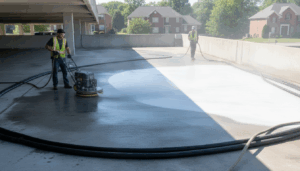
- Parking lots and parking garages with oil drips, tire marks, and traffic film.
- Dumpster pads that build up grease, food waste, and bacteria.
- Drive-throughs and gas station aprons soaked in oil and fuel residue.
- Warehouses, loading docks, and industrial equipment.
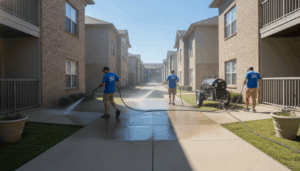
- Multi-unit complexes, apartment buildings, and HOA common areas.
Here the contaminants are heavy: oil stains, grease, chewing gum ground into concrete, graffiti, rust, and traffic buildup. A dumpster pad behind a restaurant isn’t a cosmetic job. It’s a sanitation and pest-control problem, and often a health code concern. That’s why commercial work relies on hot water, degreasers, and stronger techniques. The purpose goes beyond looks. It covers safety, sanitation, liability, and keeping a professional face for customers and tenants.
This is one of the clearest ways to understand residential vs commercial pressure washing. A homeowner is protecting curb appeal and the life of their siding. A commercial owner is often protecting their brand, their tenants, and their compliance standing all at once.
Scheduling and logistics around Lexington
People rarely think about scheduling when they compare residential vs commercial pressure washing Lexington KY services, but it’s one of the biggest practical differences, and it directly affects pricing.
Residential scheduling
House washing is simple to schedule. We come during normal daytime hours, knock out a house wash in a few hours, and we’re done. Most homeowners just need to close their windows, bring the dog inside, and move any patio furniture that shouldn’t get wet. One truck, one small crew, straightforward access. There isn’t much coordination, and we can usually get you on the calendar within a week or two depending on the season.
The busy season in Central Kentucky runs from about April through October. Spring pollen season and pre-summer prep are the peak, so if you want your house washed before Memorial Day, book early. Fall is great for gutter brightening and getting the house clean before the holidays.
Commercial scheduling
Commercial jobs are a logistics puzzle. A retail center on Man o’ War can’t have us blocking storefronts and spraying water across walkways at noon on a Saturday. So a lot of commercial work happens:
- Overnight or early morning for restaurants, storefronts, and shopping centers.
- On weekends for office parks and business districts.
- In phased sections for parking garages, so half stays open while we clean the other half.
Commercial work also means coordinating with property managers, tenants, security for garage access, and sometimes the city if we’re working near a public right-of-way. Larger crews, more equipment, water sourcing, and traffic control all come into play. When you’re weighing residential vs commercial pressure washing Lexington KY needs, understand that a commercial bid includes the cost of this coordination and off-hours labor, not just the cleaning itself.
Safety and regulatory compliance
Safety matters on every job, but the scale and requirements change once you cross into commercial work. This is a serious part of the residential vs commercial pressure washing Lexington KY discussion, and it’s one property managers should ask about directly.
Commercial safety and OSHA
Commercial operations deal with employees, the public, powerful equipment, and larger sites, so the safety protocols are stricter. OSHA regulations become highly relevant on commercial jobs. They cover things like:
- Personal protective equipment (PPE): eye protection, gloves, hearing protection, and durable footwear.
- Crew training on equipment operation and chemical handling.
- Electrical safety, including GFCI protection when working around power.
- Workflow and site control to keep the public out of work zones.
A reputable commercial contractor also carries proper liability insurance and workers’ compensation. If a crew is working overnight in a parking garage and someone slips, or a hose fails, you want that fully covered. Ask any commercial contractor for a certificate of insurance before they set foot on your property.
Environmental and wastewater rules
This one catches people off guard. Commercial pressure washing produces wastewater loaded with oil, grease, detergents, and debris. You can’t legally just let that run into a storm drain, because storm drains around Lexington often flow straight to creeks and the watershed without treatment. Commercial projects require:
- Proper wastewater capture and disposal, especially for oily runoff from lots and pads.
- Stormwater management to keep contaminated water out of storm drains.
- Correct handling and dilution of cleaning chemicals.
Depending on the job, permits or specific business licenses may also be required. A serious commercial contractor knows the environmental rules and has a plan for containment. If a company quotes you a suspiciously cheap price on a greasy dumpster pad and has no answer about where the wastewater goes, that’s a red flag that can come back on you as the property owner.
Residential safety
Residential safety is more straightforward but still real. The main risks are:
- Never pointing a wand at people or animals. That pressure can cut skin.
- Electrical hazards near outdoor outlets and fixtures.
- Never mixing pressure washing with ladders. The recoil can knock you off, which is exactly why professionals use soft washing and extension equipment to reach second stories and roofs from the ground.
- Using the correct pressure for each surface so you don’t damage wood, paint, or siding.
When homeowners try to DIY, most of the damage I get called to fix comes from too much pressure on the wrong surface, or from someone up a ladder with a wand. Worth remembering when you weigh residential vs commercial pressure washing options and decide whether to hire out.
Cleaning solutions and techniques
The chemistry and technique is where experience really shows, and it’s another clear line in the residential vs commercial pressure washing Lexington KY comparison.
Residential: soft washing and mild detergents
Most quality house washing today is actually soft washing, not high-pressure blasting. Soft washing uses low pressure combined with specialized cleaning solutions that kill algae, mold, and mildew at the root. The detergent does the work while it dwells, then we rinse gently. That’s how you clean vinyl, wood, stucco, and painted surfaces without damage. It also lasts longer, because you’re actually killing the organic growth instead of just knocking the surface layer off.
For roofs, soft washing is basically the only correct method. Roof shingles should never take high pressure, because it strips the protective granules and voids many shingle warranties. Those black streaks are a type of algae, and the right low-pressure treatment clears them and keeps them gone for a long time.
Commercial: hot water and heavy-duty degreasers
Commercial cleaning often needs the heavy artillery. Hot water systems and specialized degreasers cut through oil, grease, and industrial grime that cold water can’t touch. Techniques include surface cleaners for even, streak-free concrete over large areas, hot water for grease at drive-throughs and dumpster pads, and targeted spot treatment for gum and oil stains. All of it still has to follow environmental guidelines for the chemicals used and where the runoff ends up.
The short version on technique: residential work leans on chemistry and gentle pressure to protect surfaces. Commercial work combines heat, stronger agents, and higher flow to beat tough contaminants at scale.
What about pricing?
Pricing follows everything above. For residential vs commercial pressure washing Lexington KY property owners, here’s roughly how it shakes out.
Residential pricing
Residential jobs are usually priced by the job or by square footage, and the numbers are predictable:
- A typical single-story house wash in the Lexington area might run a few hundred dollars.
- Larger two-story homes and brick homes with more square footage cost more.
- Driveways, patios, decks, and gutter brightening are often add-ons or standalone smaller jobs.
Because residential work is easy to schedule and access, you aren’t paying for overnight labor or heavy logistics.
Commercial pricing
Commercial pricing reflects the equipment, the labor, the off-hours scheduling, the insurance, and the compliance. Large lots and garages may be priced per square foot at a lower rate, but they add up because of sheer size. Recurring maintenance contracts are common for restaurants, retail centers, and HOAs, and those usually get better per-visit pricing than a one-time job. When you get a commercial bid, remember you’re paying for a professional operation that can legally and safely handle the scope, not just the cleaning.
If you’re a property manager comparing quotes, don’t just look at the bottom number. Compare what’s included: insurance, wastewater handling, scheduling around your tenants, and whether they use hot water for grease. A cheap bid that skips those things isn’t actually cheaper once something goes wrong.
How to decide which one you need
Let me make the residential vs commercial pressure washing Lexington KY decision simple. Ask yourself these questions:
- What am I cleaning? A home, its siding, roof, deck, driveway, or gutters points to residential service. A storefront, lot, garage, dumpster pad, or multi-unit property points to commercial.
- What is the contamination? Pollen, algae, mildew, and general dirt are residential. Oil, grease, gum, graffiti, and heavy traffic buildup are commercial.
- Does scheduling need to work around a business? If you need overnight or off-hours work to avoid disrupting customers and tenants, that’s a commercial job.
- Is there wastewater and compliance to worry about? Greasy runoff and regulatory concerns push you toward a contractor set up for commercial work.
Plenty of contractors do both, and that’s fine as long as they show up with the right equipment and approach for your specific property. The problem is only when a residential-only outfit tries to muscle through a commercial job with the wrong gear, or a commercial crew treats a delicate wood home like a parking lot.
A few Lexington-specific tips
Because of our climate, here’s what I tell local property owners no matter which category they fall into:
- Time house washing for spring or fall. Get ahead of pollen season or clean up after it, and consider fall to prep for winter.
- Don’t ignore roof algae. Those black streaks spread and can shorten shingle life. Soft washing handles it without damage.
- Commercial owners should set up recurring service. Dumpster pads and high-traffic entries don’t stay clean. A maintenance schedule is cheaper than emergency deep cleans and health complaints.
- Always ask about insurance and wastewater on commercial jobs. It protects you as the property owner.
The bottom line on residential vs commercial pressure washing Lexington KY
Both services use pressurized water, and that’s about where the similarity ends. Residential work is about controlled cleaning, soft washing, and protecting the surfaces of your home while it looks its best. Commercial work is about heavier equipment, hot water, degreasers, off-hours scheduling, stricter safety and environmental compliance, and cleaning large, high-traffic properties efficiently.
The whole point of understanding residential vs commercial pressure washing Lexington KY property owners face is so you hire the right service the first time. Match the contractor and equipment to your actual property and contaminants, ask the right questions about insurance and technique, and you’ll get a clean result that lasts with no surprises. A house in Beaumont, a strip center on Man o’ War, an HOA out in Jessamine County. There’s a right way to do each one, and now you can tell the difference.
If you’re still not sure which category your property falls into, the easiest thing to do is describe the surface and the mess to a local pro. Most of us can tell you in about thirty seconds whether it’s a residential soft wash or a commercial hot-water job, and give you an honest number to go with it.
Frequently asked questions
What is the difference between residential and commercial pressure washing?
Residential pressure washing uses lower pressure and soft washing techniques to safely clean homes, siding, roofs, and driveways. Commercial pressure washing uses more powerful equipment, hot water, and stronger degreasers to clean large properties like parking lots, storefronts, and dumpster pads. The equipment, chemicals, scheduling, and safety requirements are all different.
How much does house washing cost in Lexington, KY?
A typical single-story house wash in the Lexington area usually runs a few hundred dollars, with larger two-story and brick homes costing more. Add-ons like driveways, decks, and gutter brightening are priced separately. Getting a quote based on your home’s size and surfaces gives you the most accurate number.
Do I need commercial pressure washing for my apartment complex or HOA?
Yes. Multi-unit complexes, apartment buildings, and HOA common areas are commercial jobs because of their size, scheduling needs, and shared surfaces. Commercial service handles the logistics of working around tenants and often includes recurring maintenance plans. It also covers proper insurance and wastewater handling for the property.
Is pressure washing safe for my roof and siding?
High pressure can damage roof shingles, wood, paint, and vinyl siding, which is why professionals use soft washing instead. Soft washing uses low pressure with cleaning solutions that kill algae and mildew without harming the surface. For roofs especially, low-pressure treatment is the only safe method and protects your shingle warranty.
When is the best time to pressure wash my house in Central Kentucky?
Spring and fall are the best times for house washing in the Lexington area. Spring cleans off pollen and winter grime, while fall preps your home for the holidays and winter. Book early in the season, since April through October is the busiest stretch for local pressure washing companies.
Why do commercial pressure washing jobs happen overnight or on weekends?
Commercial work is often scheduled off-hours to avoid disrupting customers, tenants, and daily business operations. Cleaning a storefront, parking lot, or garage during peak hours isn’t practical or safe for the public. That off-hours scheduling is one reason commercial pressure washing costs more than residential work.