Parking Garage Cleaning in Lexington, KY
Cleaner, safer parking structures for Central Kentucky property managers. We do the whole deck, not just the easy parts.
What Parking Garage Cleaning Actually Covers
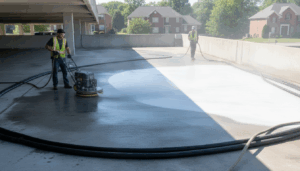
A parking garage takes a beating. Tires track in road grime, oil drips onto the deck, salt and brine get dragged in all winter, and trash and cobwebs build up in the corners nobody looks at. Our parking garage cleaning service handles the full structure so it stays clean, presentable, and safe for the people who use it every day.
Here is what we typically clean on a parking structure:
- Deck surfaces on every level, including ramps and drive lanes
- Parking stalls and painted line areas
- Oil stains, tire marks, and rubber buildup
- Stairwells and stair treads
- Entrance and exit ramps
- Concrete columns, walls, and curbs
- Trash removal and cobweb knockdown
- Drain and trench cleaning so water actually goes where it should
We work on both concrete and coated decks. If your deck has a traffic coating or membrane, we adjust our pressure and method so we clean it without tearing up the surface.
Why It Matters for Lexington and Central Kentucky Properties
Around here the biggest problem is winter. The city and property crews put down salt and brine to keep ramps from icing over, and all of that ends up ground into the deck. Left alone, it eats at concrete and rebar over time. A clean deck lasts longer and costs less to maintain than one that never gets touched.
There is also the appearance side. If you manage an office building, a medical plaza, or a mixed use property, the garage is often the first thing a tenant or customer sees. A stained, dusty deck with cobwebs in the stairwell tells people nobody is paying attention. A clean structure tells them the property is well run.
Safety is the other piece. Oil and algae make ramps slick. Poor drainage leaves standing water. Dim, dirty stairwells feel unsafe. Regular cleaning cuts down on the slip hazards and the liability that comes with them.
Our Process
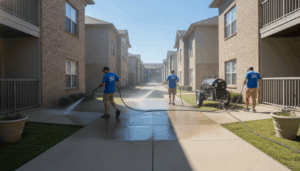
We keep the work organized so your garage stays open and your tenants are not stuck without parking. Here is how a typical job runs:
- Walkthrough and plan. We come out, look at the deck condition, note the drains, coatings, oil stains, and problem areas, and figure out the cleaning method for your specific surface.
- Scheduling around your traffic. We work section by section or level by level, often overnight or early morning, so we never shut down the whole garage at once.
- Dry cleanup first. We sweep and blow debris, knock down cobwebs, and haul off trash before any water touches the deck. This keeps the drains from clogging.
- Pretreat stains and buildup. Oil spots, tire marks, and salt residue get treated so they actually lift instead of just getting pushed around.
- Surface cleaning. We use surface cleaners and controlled pressure to clean the deck evenly, then detail the edges, curbs, columns, and stalls by hand.
- Stairwells and entries. These get cleaned separately since they see foot traffic and need to look sharp.
- Water management. We control and direct wash water to the drains and clean the trenches so nothing sits and nothing runs where it should not.
- Final check. We walk it with you or send photos so you can see the before and after and sign off on the work.
What Affects the Cost
Every garage is different, so we price by the job after we see it. These are the things that move the number up or down:
- Total square footage and number of levels. More deck means more time and more water.
- Deck condition. A garage that has not been cleaned in years takes more work than one on a regular schedule.
- Coating type. Coated and membrane decks need a gentler, slower approach than bare concrete.
- Oil and stain volume. Heavy oil buildup requires extra pretreatment and labor.
- Water access and drainage. Easy water hookups and working drains speed things up. Poor drainage means we spend more time managing runoff.
- Scheduling requirements. Overnight or phased work to keep the garage open takes more coordination.
- Frequency. Properties on a recurring schedule pay less per visit than one time deep cleans.
We would rather give you an accurate number after a walkthrough than throw out a guess that changes later. No surprises on the invoice.
When to Book It
Most Lexington properties do well with cleaning once or twice a year, with the most important cleaning happening in early spring. That is when you clear out all the salt, brine, and grit that built up over the winter before it does more damage to the deck.
Book a cleaning when:
- Winter is over and the deck is coated in salt residue
- You are turning over tenants or leasing to new ones
- Oil stains and tire marks are getting noticeable
- Drains are backing up or water is pooling on the deck
- You are prepping for an inspection, sale, or refinance
- It has simply been too long and you cannot remember the last time
If you manage several properties, setting up a recurring schedule is the easiest way to keep every garage looking right without having to think about it. We handle the timing and just show up when it is due.
Frequently asked questions
How often should a parking garage be cleaned?
Most Lexington properties do well with one or two cleanings a year, with the key cleaning in early spring to clear out winter salt and brine. Higher traffic garages or ones with heavy oil buildup may need more frequent attention. We can set up a recurring schedule so you do not have to track it.
Will you have to shut down the whole garage while you work?
No. We work section by section or level by level, often overnight or early morning, so parking stays available. We plan the schedule around your traffic during the initial walkthrough.
Can you clean coated or membrane parking decks without damaging them?
Yes. We adjust our pressure and cleaning method based on your deck surface. Coated and membrane decks get a gentler approach so we clean them thoroughly without tearing up the finish.
How do you handle the wash water and drainage?
We control and direct wash water to the existing drains and clean out the trenches so nothing pools or runs where it should not. We do a dry cleanup first to keep debris from clogging the drains.