If you manage apartments or multi-family housing around Lexington, your building exteriors are doing half your marketing whether you like it or not. A prospective tenant pulls into the lot, sees green streaks down the siding, black stair treads, and a dumpster pad that looks like a crime scene, and they’ve decided against you before they ever walk a unit. A clean, bright property does the opposite. It tells people management actually pays attention. That’s the whole game, and it’s why I want to walk you through what apartment complex pressure washing in Lexington KY really involves, so you can budget for it, schedule it right, and avoid getting burned by someone who doesn’t know the work.
I run the rig myself, so this isn’t marketing fluff. This is what I’d tell you standing in your parking lot with a clipboard. We’ll go over the surfaces that matter, how often you actually need service given Central Kentucky’s climate, why soft washing beats blasting on most of your buildings, how a decent crew works around your residents, and what drives the price. By the end you should be able to write a smart scope of work and spot a bid that’s too cheap to be real.
Why apartment complex pressure washing in Lexington KY is different from houses
Cleaning a single-family home is a half-day job. Cleaning a 120-unit complex is a logistics operation. When people ask me about apartment complex pressure washing in Lexington KY, the first thing I explain is that scale changes everything about how the work gets planned and priced.
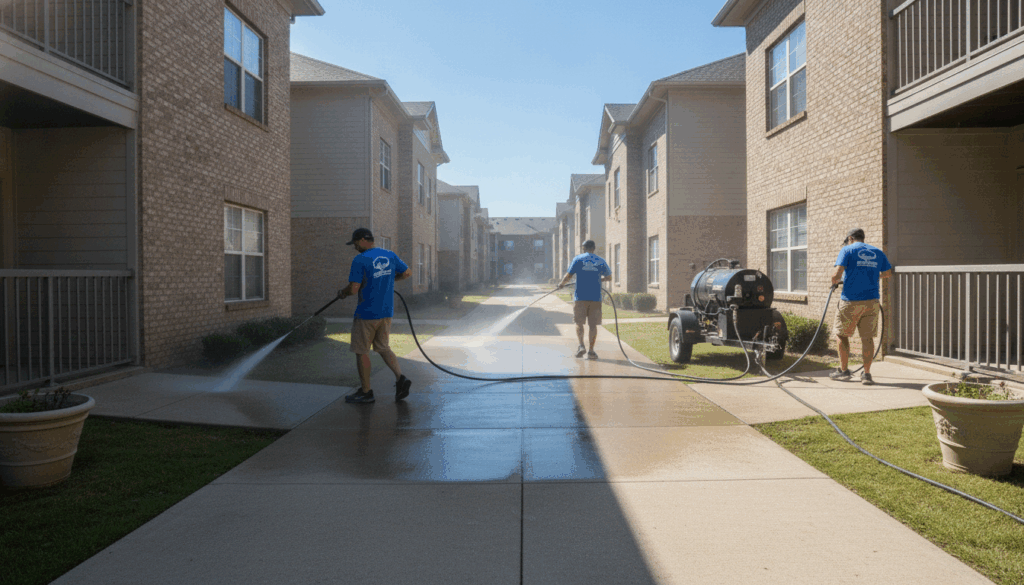
On a house, the only person walking through the work zone is the homeowner. On your property, you’ve got residents coming and going around the clock, kids on bikes in the breezeways, delivery drivers, dog walkers, and folks parked right where we need to run hose. A crew that treats a 200-unit complex like a big house is going to create hazards and complaints. The real skill in this line of work isn’t spraying water. It’s moving through an occupied property in sections, keeping walkways safe, and getting out clean.
The surfaces are more varied and more abused, too. A typical Lexington apartment community has vinyl or brick buildings, painted trim, concrete sidewalks and stairs, metal handrails, dumpster corrals, pool decks, and maybe some stamped concrete at the entrance. Each of those wants a different pressure, a different tip, and often a different cleaning solution. Getting apartment complex pressure washing in Lexington KY right means knowing which surface gets soft washed and which one can take real pressure. Use the wrong method and the damage comes out of your budget.
Then there’s the volume of organic growth. Central Kentucky is humid, and we get a long stretch of warm, damp weather every year. Algae, mold, and mildew love the north-facing walls, the shaded breezeways, and any concrete under a tree line. On a big property with a lot of building faces and shade, that growth never stops. It’s not a one-and-done problem, which is why frequency matters so much for multi-family work.
The surfaces that actually need attention on your property
When I do a walkthrough for a bid, I map every surface and how it should be cleaned. Here’s what I’m looking at on a typical Lexington complex, and why each one matters.
Building exteriors and siding
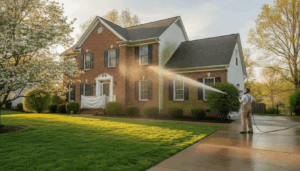
Vinyl siding, brick, stucco, and painted wood all collect the green and black stuff over time. Vinyl and painted surfaces get soft washed, meaning low pressure with a cleaning solution that kills the growth at the root so it doesn’t come right back. Brick can usually take a little more pressure but still does better with a soft-wash chemical clean than a blast that eats the mortar out of the joints. The building faces are the biggest visual win on the whole property, because that’s what people see first from the street.
Breezeways, stairwells, and walkways
These are your highest-liability areas. Foot traffic packs dirt into the concrete, and shaded stairwells grow a slick film of algae that turns into a slip-and-fall claim waiting to happen. I put breezeways and stairs near the top of the priority list for exactly that reason. Clean stair treads are about looks, sure, but they’re also about not getting a call from a resident’s lawyer.
Sidewalks, entryways, and common concrete
Concrete is a magnet for gum, spilled drinks, rust stains from patio furniture, and general grime. Sidewalks and entry areas get surface-cleaned with a flat rotary tool that leaves an even finish instead of the wand striping you see when someone does it wrong. A clean entryway sets the tone for the whole property.
Parking lots, garages, and dumpster pads
Oil drips, tire marks, and the mess around dumpster corrals are the ugly jobs, but they matter for appearance and code compliance both. Dumpster pads in particular get nasty and can create odor and pest issues. These areas usually want hot water and degreaser to actually cut the buildup instead of just wetting it down.
Pool decks and amenity areas
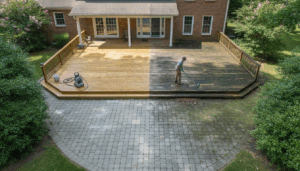
If you’ve got a pool, the deck gets slick and grimy fast, and it’s a high-visibility amenity residents notice. Same goes for courtyards, patios, grilling areas, and any outdoor gathering space. These are the spots that help you keep tenants, so they’re worth cleaning on a schedule.
Signage, gutters, and detail work
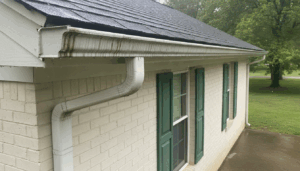
Your monument sign at the entrance, the gutters running along the buildings, the trim details, they all add up. Gutter brightening removes the black tiger-striping that shows up on white gutters and makes a building look neglected. These are small line items that make a big difference in how sharp the property reads.
- Soft wash surfaces: vinyl siding, painted wood, stucco, gutters, roofs, signage
- Higher-pressure or surface-clean: concrete sidewalks, stairs, parking areas, dumpster pads
- Degreaser and hot water zones: dumpster corrals, oil-stained parking, service areas
- Priority for safety: stairwells, breezeways, pool decks, entry walks
How often you need apartment complex pressure washing in Lexington KY
This is the question I get most from property managers, and the honest answer is that it depends on your property, but there’s a sensible baseline. For most Central Kentucky apartment communities, I recommend a twice-a-year approach to apartment complex pressure washing in Lexington KY, with one service in spring and one in fall.
Here’s the logic. Spring cleaning knocks off the winter grime and gets you looking sharp right when leasing season heats up and people are shopping for units. Fall cleaning clears the summer’s algae and the leaf debris before winter sets in. Two hits a year keeps most properties in good shape and stops the growth from getting a permanent foothold on your surfaces.
Twice a year isn’t right for everybody, though. A few factors push you toward quarterly service:
- Heavy tree coverage. Lots of Lexington complexes are wooded and shaded, which is great for residents but rough on north-facing walls and shaded concrete. Shade plus moisture equals fast algae growth.
- High foot traffic and density. A packed 200-unit property with narrow breezeways gets dirty faster than a spread-out garden-style community.
- Humidity and moisture exposure. Buildings near creeks, retention ponds, or low spots that hold water grow more mold and mildew.
- Older painted surfaces. These show dirt faster and do better with more frequent, gentle cleaning.
For those higher-need properties, quarterly apartment complex pressure washing in Lexington KY does a much better job of controlling the growth so it never gets ahead of you. And no matter your regular schedule, plan for spot cleaning after major storms, after graffiti, or when a specific area like a stairwell or dumpster pad gets out of hand. A good maintenance plan builds in a couple of those spot visits so you’re not calling for an emergency bid every time.
Here’s a straight fact: skipping years to save money almost always costs more in the end. When growth sits on siding or concrete for two or three seasons, it starts to break down the surface, stain it permanently, and demand harsher cleaning that itself risks damage. Consistent apartment complex pressure washing in Lexington KY is preventive maintenance, and preventive maintenance is always cheaper than repair.
Soft washing vs. high pressure: why method beats muscle
The most common way I see apartment properties get damaged is somebody showing up with a pressure washer cranked way too high, treating every surface the same. High PSI feels productive because you can watch the dirt blast off, but on the wrong surface it does real harm.
Blast vinyl siding with high pressure and you can crack it, drive water up behind it into the wall cavity, and strip the finish. Hit painted trim and you’ll peel the paint. Aim a turbo nozzle at old mortar joints and you’ll erode them. Etch stamped or decorative concrete with too much pressure and you leave permanent marks. In a lot of cases, the wrong method voids material warranties, which is a headache no property manager wants to explain to an owner.
That’s why professional apartment complex pressure washing in Lexington KY leans hard on soft washing for the delicate surfaces. Soft washing uses low pressure with the right cleaning solution to kill algae, mold, and mildew at the root. The chemistry does the work, not the force. The surface comes clean without damage and stays clean longer, because the growth was actually killed instead of just knocked off.
High pressure and surface cleaning belong on the tough, flat, hard surfaces: concrete sidewalks, stairs, parking areas, and dumpster pads. Even there, a professional uses a surface cleaner attachment for an even finish and reaches for hot water plus degreaser on oil and organic buildup rather than just cranking the PSI. Knowing when to soft wash and when to bring the pressure is the entire difference between a crew that protects your property and one that damages it. When you’re vetting a contractor for apartment complex pressure washing in Lexington KY, ask them directly which surfaces they soft wash and why. If they can’t give you a clear answer, keep looking.
Working around residents without creating a circus
The logistics of an occupied property are where a lot of the real value lives. Anybody can spray water. Doing it on a 150-unit property without generating a stack of complaints takes planning.
Here’s how a good crew handles apartment complex pressure washing in Lexington KY on an occupied community:
- Advance notice to residents. We coordinate with you to get flyers or door notices out a few days ahead, telling people which buildings and areas get worked on which days, and asking them to move vehicles and pull patio items inside.
- Section-by-section work. Instead of tearing the whole property apart at once, we work in defined zones. That keeps most walkways open and lets residents get in and out while we handle one building at a time.
- Secured work zones. We cone off and flag active areas so nobody walks into a wet, slick stairwell or trips over a hose. Resident safety comes first, and it also protects you from liability during the service itself.
- Scheduling around amenity hours. Pool decks get done before the pool opens or after it closes. High-traffic entries get handled in slow windows. Some properties even want certain areas done early morning or after hours.
- Communication with the office. We check in with your on-site staff daily so you always know what’s done and what’s next, and so you can answer resident questions with real information.
There’s another payoff to having pros crawling all over your buildings for a few days. We spot things. During apartment complex pressure washing in Lexington KY, a good crew will flag broken downspouts, gutter sections pulling loose, spots where water is getting behind siding, roof problems, cracked concrete that’s a trip hazard, and failing caulk. We’re not roofers or general contractors, but we’ll tell you what we see so you can get ahead of it before it becomes a bigger repair. That extra set of eyes is worth something on a big property.
What apartment complex pressure washing in Lexington KY actually costs
Everybody wants a number, and I get it. The honest truth is that pricing for a multi-family property gets quoted per property after a walkthrough, not off a rate card, because no two complexes are alike. But I can tell you what drives the price so you understand the bid in front of you.
Square footage and unit count
A 24-unit property and a 240-unit property are different animals. More buildings, more concrete, and more surface area means more labor hours and more material. Scope drives cost, so the size of your property is the biggest single factor.
Scope of surfaces
A bid to soft wash just the building exteriors is very different from a full-property clean that includes all sidewalks, stairs, breezeways, parking, dumpster pads, pool deck, and gutter brightening. Decide what you actually need before you ask for bids, so you’re comparing apples to apples.
Access and complexity
Tight sites, three-story buildings, long hose runs, and awkward parking layouts all add time. So does heavy growth that needs a stronger treatment or a second pass. A property that’s been neglected for years costs more on the first cleaning than a property on a maintenance plan, because we’re catching up on years of buildup.
Water access
Most properties have spigots we can tap, but some large jobs go better when a crew brings its own water supply, so we’re not draining your system or juggling access. That capacity matters on the bigger complexes.
Frequency and contract
This is where you save money. A one-time deep clean of a neglected property is the most expensive way to buy this service. Signing up for a recurring plan, twice a year or quarterly, usually earns better per-visit pricing, because we can plan our season around your property and because maintenance cleans go faster than catch-up cleans. Recurring apartment complex pressure washing in Lexington KY is almost always the smarter budget play for an ongoing property.
A word of caution on cheap bids. If one number comes in dramatically lower than everyone else, ask what’s missing. Usually it’s insurance, proper equipment, or the knowledge to soft wash your siding safely. A lowball bid that cracks your vinyl or peels your paint isn’t a bargain. For apartment complex pressure washing in Lexington KY, you want a fully licensed, bonded, and insured contractor, and you want to see proof before they touch your property. If a claim ever happens, that insurance is the difference between a covered accident and a lawsuit against your ownership group.
The real return on apartment complex pressure washing in Lexington KY
Let me put on the property manager hat for a minute, because I know your job is about numbers and headaches, not clean concrete. Here’s where regular apartment complex pressure washing in Lexington KY actually pays off.
Occupancy and turnover
Curb appeal isn’t a luxury. It’s a leasing tool. A clean property photographs better for your listings, shows better on tours, and signals to prospects that management runs a tight ship. Clean common areas also make current residents proud of where they live, which nudges them toward renewing instead of shopping around. Lower turnover is real money when you count a vacant unit, a make-ready, and a leasing push.
Reduced liability
Every algae-slicked stair and greasy walkway is a slip-and-fall claim waiting to happen. Removing that growth on a schedule is a documented, proactive safety measure. If something does happen, being able to show you maintain the property regularly is a much stronger position than explaining why the stairs were green.
Protecting the physical asset
Dirt, organic growth, and environmental grime break down siding, concrete, wood, and paint over time. Algae holds moisture against surfaces, and moisture is what wrecks building materials. Cleaning those contaminants off before they cause lasting damage extends the life of your surfaces and pushes off the day you have to repaint, re-side, or replace concrete. That’s capital expense you get to defer.
Fewer complaints and easier inspections
Scheduled cleaning keeps you ahead of resident complaints about dirty breezeways and helps you clear ownership standards, brand requirements, and any local expectations for upkeep. When an owner rep or an inspector walks the property, a clean exterior is one less thing to explain.
A healthier property
Killing mold and mildew around the buildings and common areas is genuinely better for the people living there. It’s a small thing that adds up to a more pleasant place to live, which loops right back into satisfaction and retention.
How to set up a maintenance plan that actually works
If you’re going to invest in apartment complex pressure washing in Lexington KY, do it as a plan, not a scramble. Here’s how I’d set it up if I were in your shoes.
Start with a full walkthrough and an honest scope. Get a contractor to map every surface, note the growth situation, and flag the priority areas. From there, decide your baseline frequency: twice a year for most properties, quarterly for heavily shaded or high-density ones. Lock the spring clean for pre-leasing season and the fall clean for post-summer growth.
Build in flexibility for spot service. Storms, graffiti, a dumpster pad that gets out of control, an oil spill in the lot. These things happen, and a plan that includes a couple of spot visits keeps them from becoming emergencies. Get the whole thing in writing with defined surfaces, frequencies, and the insurance documentation attached.
Then let the contractor own the calendar. The whole point of a plan is that it comes off your plate. A good crew reaches out to schedule each service, handles the resident notices with you, works section by section, checks in with your office, and gets out clean. You approve the plan once and the property stays sharp all year without you thinking about it every quarter.
The properties that look the best around Lexington aren’t the ones that call in a panic when the siding turns green. They’re the ones on a steady schedule where the growth never gets a chance to take hold. Consistent apartment complex pressure washing in Lexington KY is one of the cheapest, highest-visibility things you can do to protect your asset, keep your residents happy, and make your job easier. Get a walkthrough, get a real bid from an insured pro, and put it on the calendar. Your property, and your leasing numbers, will show it.
Frequently asked questions
How often should an apartment complex in Lexington be pressure washed?
Most Central Kentucky apartment communities do well with cleaning twice a year, once in spring and once in fall. Properties with heavy tree coverage, high foot traffic, or lots of shade and moisture often need quarterly service to keep algae and mold under control. Spot cleaning after storms or for problem areas is common on top of the regular schedule.
Is pressure washing safe for vinyl siding and painted surfaces on apartment buildings?
It is when it’s done as a soft wash, which uses low pressure and a cleaning solution instead of high force. Blasting vinyl or painted surfaces with high pressure can crack siding, peel paint, and drive water behind the walls. A professional soft washes delicate surfaces and saves higher pressure for concrete and other tough materials.
How much does apartment complex pressure washing in Lexington KY cost?
Pricing gets quoted per property after a walkthrough, because it depends on unit count, square footage, which surfaces are included, site access, and how much growth has built up. Neglected properties cost more on the first clean than properties on a maintenance plan. Signing up for recurring twice-a-year or quarterly service usually earns better per-visit pricing.
Will pressure washing disrupt my residents?
Not if it’s planned right. A good crew works section by section, sends advance notice so residents can move cars and patio items, cones off wet work zones for safety, and schedules around amenity hours like pool time. Most residents barely notice beyond a heads-up flyer and a couple of moved vehicles.
What areas of an apartment complex should be pressure washed?
The high-value targets are building exteriors, breezeways, stairwells, sidewalks, entryways, parking areas, dumpster pads, pool decks, and common gathering spaces. Stairwells and walkways come first because algae growth there creates real slip-and-fall risk. Gutter brightening and signage cleaning add polish to the overall look.
Should I hire a licensed and insured contractor for this work?
Yes, always ask for proof of licensing, bonding, and insurance before anyone touches your property. If an accident or property damage happens, that coverage protects your ownership group from liability. A lowball bid that skips insurance or uses the wrong cleaning methods can end up costing far more than it saves.
Sources
- How Pressure Washing Helps Maintain Apartment Communities – San Marcos Window Washing
- The Benefits of Pressure Washing for Apartment Complexes
- The Importance of Apartment Pressure Washing: A Professional Guide to Best Practices and Benefits
- Apartment Complex Building Pressure Washing: Essential Cleaning Benefits – iShine Cincy
- Benefits of Apartment Complex Pressure Washing | FAQ – KEVCO Building Services
- Why schedule regular pressure washing for multifamily properties