Drive around Lexington in late summer and you’ll spot them on almost every block: black streaks running down the north side of asphalt roofs. Homeowners call them water stains. They’re not. That’s algae, and once you know what you’re looking at, you can’t unsee it. A roof in that shape can usually be cleaned back to almost new. The catch is that most people go about it completely wrong, and a botched job costs a lot more than the cleaning ever would have.
I run the rig myself. I’ve been on hundreds of Central Kentucky roofs and cleaned up after plenty of DIY attempts and cut-rate contractors. This isn’t a marketing piece. It’s a plain rundown of the roof cleaning mistakes Lexington KY homeowners keep making, why they cost money, and how to sidestep each one. Read it before you rent a pressure washer or hand a stranger a check.
Why roof cleaning matters in Central Kentucky
Before the mistakes, it helps to understand what we’re up against. Lexington sits in a humid climate zone. Real summers, decent rainfall, plenty of shade from mature trees, and a lot of moisture hanging in the air. That’s a perfect setup for organic growth on a roof.
The black streaking is a blue-green algae called Gloeocapsa magma. It feeds on the limestone filler baked into asphalt shingles and spreads through airborne spores. That’s why one house on a street gets it, then the neighbors do too. In the shadier parts of neighborhoods like Ashland Park, Chevy Chase, and the older tree-lined streets off Tates Creek, we also see moss and lichen. Moss holds water against the shingle like a sponge. Lichen roots right into the granule surface and is one of the hardest things to remove.
Left alone, that growth does real damage. It traps moisture, speeds up granule loss, and shortens shingle life. A dark, algae-covered roof also absorbs more heat and can push attic temperatures up. A roof that should last 25 to 30 years can lose several years off its life to growth nobody dealt with. So cleaning matters. The problem is that the wrong cleaning does more harm than the algae ever would. That’s why this list exists.
Here are the roof cleaning mistakes Lexington KY homeowners make, one at a time.
Mistake 1: Using high-pressure washing on shingles
This is the big one, and it costs the most. People see the phrase “pressure washing” and assume that’s what a roof needs. It isn’t. Blasting an asphalt shingle roof with high pressure is one of the fastest ways to ruin it.
Here’s what actually happens on the surface. Asphalt shingles are coated with tiny mineral granules. Those granules are the roof’s sunscreen. They shield the asphalt underneath from UV, and they give the shingle its weight and fire resistance. Hit that surface with a pressure washer running 2,500 to 3,000 PSI and you strip the granules off by the thousands. You’ll watch them wash into the gutters as a gritty black sludge. That grit is your roof’s protective layer leaving the building.
It gets worse. High pressure lifts the seal strips that hold shingles down, loosens or cracks tabs, and forces water up under the shingles and into the decking. Now you’ve got moisture where it was never meant to be. That leads to rot, attic mold, and leaks that might not show up until the next hard rain. I’ve been called out to look at “roof cleaning damage” where a homeowner or cheap contractor pressure washed, and within a year they were replacing sections of the roof.
The fix: soft washing
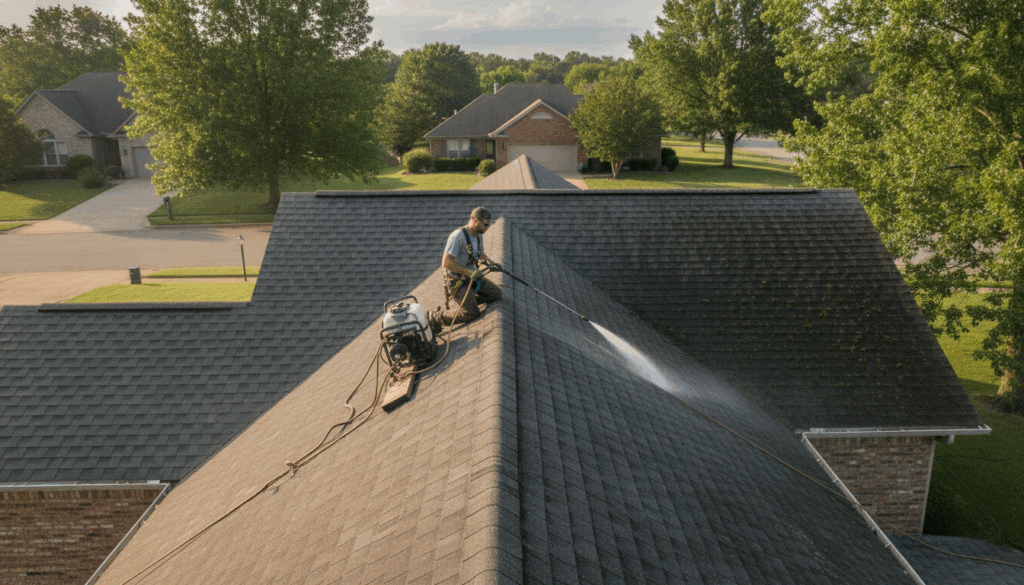
The right method for a roof is soft washing. It uses low pressure, about the same force as a garden hose, along with cleaning solutions that kill the growth at the source. You’re not blasting anything off with force. You’re killing it chemically and rinsing gently, then letting the rain finish the job over the following weeks.
Soft washing is the standard any reputable roof cleaner in Central Kentucky should be using. If someone shows up with a surface cleaner and a pressure wand pointed at your shingles, stop them. That one decision separates the pros from the people about to cost you a new roof. Of every mistake on this list, using high pressure is the one I most wish I could stop before it starts.
Mistake 2: Using harsh or improper chemicals
Once folks learn a roof needs a cleaning solution and not just water, the next mistake shows up. They grab whatever is under the kitchen sink or pour straight bleach on the roof. I get the logic. Bleach kills mold, so it should kill roof algae, right? It’s more complicated than that, and getting it wrong creates its own problems.
Straight household bleach, or the wrong concentration, can strip color from shingles and leave lighter patches and streaks. It corrodes metal flashing, gutters, and fasteners. And it wrecks landscaping. Runoff loaded with the wrong chemistry, or applied without protecting the plants, burns shrubs, kills grass, and stains hardscape. Lexington has a lot of homes with mature foundation plantings and boxwoods that cost real money to replace, so this matters.
The other side of it: people using cleaners that are too weak. A general-purpose deck wash or a store-bought “roof cleaner” that isn’t strong enough to actually kill Gloeocapsa magma and lichen. You get streaky, uneven results and the growth comes right back.
The fix: roof-specific solutions applied correctly
Professional roof cleaning uses solutions built for roofs, mixed to the right strength for the type and severity of growth, and applied with the surrounding property protected. That means wetting down plants before and after, tarping where needed, and rinsing landscaping so nothing sits under concentrated runoff. A good crew treats your gutters, downspouts, and plants as part of the job. Wrong chemistry is one of the most avoidable mistakes on this list, and it usually happens because nobody told the homeowner there was a right way.
Mistake 3: Ignoring safety and getting up there unprepared
Let me be blunt, because this one matters. Roof work is genuinely dangerous. Every year people in Kentucky get seriously hurt or killed falling off roofs and ladders. A roof covered in algae and cleaning solution is a skating rink. Add a wet surface, a steep pitch, and someone with no fall protection and no experience, and you’ve got a real shot at a trip to UK HealthCare instead of a clean roof.
Most homeowners doing this themselves have:
- No safety harness or anchor point
- Regular sneakers instead of proper footwear
- A ladder that isn’t secured or is set at the wrong angle
- No experience reading a roof’s condition under their feet
- Nobody spotting them from the ground
Falls aren’t the only risk. Walking a roof does damage. Every step on hot or brittle shingles can crack tabs, scuff off granules, and create wear patterns that turn into leaks later. Older roofs, and any roof in the middle of a Kentucky summer afternoon, are especially fragile. You can clean your roof and cause future leaks just by walking on it wrong.
The fix: keep your feet on the ground
This is exactly why professional soft washing is done from the ground, or from a ladder wherever possible, using equipment that reaches the roof so nobody has to walk it. The right setup lets a technician apply solution and rinse without putting any weight on your shingles. If someone does need to be up there, they should have proper footwear, fall protection, and the training to move without doing damage. Underestimating the danger is one of those mistakes that isn’t about money. It’s about not getting hurt. A one-story ranch off Nicholasville Road is dangerous enough. A steep two-story in a hilly subdivision is not a DIY project.
Mistake 4: Skipping the inspection and ignoring the gutters
Here’s a mistake that seems small but causes big headaches. Cleaning the roof surface while ignoring what’s underneath it and around it. A roof is a system. If you only think about the streaks and forget the rest, you set yourself up for problems.
Two things get skipped most often.
Skipping the pre-cleaning inspection
Before any solution touches your roof, someone should actually look at it. Loose, cracked, or missing shingles? Is the flashing around the chimney and vents sealed? Any existing soft spots or prior repairs? Clean over top of existing damage and you can make it worse, driving water into places where the roof is already compromised. A quick, honest inspection tells you whether the roof is even a candidate for cleaning, or whether it needs a roofer first. Sometimes the answer is that the roof is too far gone and cleaning it is just throwing money at something that needs replacing. A straight shooter will tell you that.
Ignoring the gutters
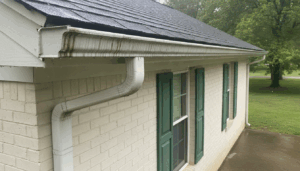
Clogged, sagging gutters full of debris and algae runoff cause water to back up under the roof edge, rot fascia boards, and dump water against your foundation. Roof cleaning that ignores the gutters leaves half the job undone. Gutters in Lexington also get their own black staining and tiger-striping on the front face, which no amount of roof cleaning fixes. Gutter brightening is a separate step. A complete job handles the roof, clears debris from the gutters, and brightens the gutter faces so the whole thing actually looks finished. Treating the roof in isolation is one of those mistakes homeowners overlook because they’re focused only on the streaks they can see from the street.
The roof cleaning mistakes Lexington KY homeowners make with timing and weather
Let’s talk about when you clean, because timing matters more than people think, especially with Kentucky weather doing whatever it wants from one day to the next.
Mistake 5: Cleaning in the wrong weather
Trying to clean a roof on a wet, windy, freezing, or blazing hot day is a mistake on several fronts. Wet and windy is dangerous, as we covered, and it’s also less effective. Cleaning solution needs time to sit on the growth and work. Rain that comes in too soon washes the solution off before it’s done its job. You end up with uneven results and a roof that streaks again in a few months.
Wind causes a different problem. Overspray. On a windy day, cleaning solution drifts where you don’t want it, onto cars, neighbors’ property, windows, and plants. That’s a mess and a liability.
Extreme cold is a no-go, because the solutions don’t work well in freezing temperatures and ice on the roof is a serious slip hazard. Blazing summer heat has its own issues. Solution can evaporate off a hot roof before it works, and shingles are at their most fragile in the heat of the day.
The fix: pick a calm, mild, dry day
The sweet spot in Central Kentucky is a clear, dry, calm day with mild temperatures and no rain in the immediate forecast. Spring and fall are good windows here. A solid local crew watches the weather and will reschedule rather than push a job on a bad day. That flexibility is part of what you’re paying for. Rushing a cleaning onto the wrong day is one of the mistakes homeowners make when they’re impatient, and it usually means paying to have it done again.
Mistake 6: Treating the symptom instead of the cause
This one trips up even people who use the right method. They clean the visible stains, the roof looks great for the photo, and three or four months later the streaks are creeping back. What happened? The growth wasn’t actually killed. It was just knocked back on the surface.
Remember, those black streaks are living algae, and moss and lichen are living organisms too. Rinse the surface without killing the growth down to the root, and the spores and living material left behind start multiplying again almost immediately. This is exactly why pressure washing gives such short-lived results. It blasts off the visible layer but kills nothing, so the growth roars back and you’re right where you started, minus a layer of granules.
The fix: kill it at the source
Proper soft washing kills the growth at the root using the right solution and enough dwell time. Done right, the algae dies off and gets rinsed and weathered away over the following weeks, and the results hold. A quality roof cleaning in Lexington should keep a roof looking clean for years, not months, depending on tree cover and how shaded the roof is.
You can stretch those results too. Roofs surrounded by heavy tree canopy, which describes a lot of the older, established neighborhoods around here, grow algae back faster than a roof in full sun. Trimming trees back so the roof gets more sunlight and airflow slows regrowth. Some homeowners choose periodic maintenance treatments to stay ahead of it. The point is that a real fix goes after the biology, not just the appearance. Chasing symptoms is one of those mistakes that feels like it worked until it obviously didn’t.
Avoiding the costliest of the roof cleaning mistakes Lexington KY homeowners face: hiring the wrong contractor
If you take one thing from this whole article, take this. The single most expensive mistake isn’t a technique. It’s who you hand the job to. Every other mistake on this list, from high pressure to wrong chemicals to walking a fragile roof to ignoring the gutters, gets made by contractors who don’t know what they’re doing or don’t care. Pick the wrong company and you inherit all of it.
Mistake 7: Hiring inexperienced or unqualified contractors
Roof cleaning has a low barrier to entry. Anybody can buy a pressure washer, slap a magnet on their truck, and start knocking on doors offering a cheap roof cleaning. Some of these folks are learning on your roof. They’ll show up with a pressure washer instead of soft wash gear, use the wrong chemistry, walk all over your shingles, and skip any inspection. Here’s the kicker. If they damage your roof, an uninsured operator leaves you holding the bill.
There’s another layer. Many shingle manufacturers have specific requirements for how a roof can be cleaned to keep the warranty valid. Improper cleaning, especially high-pressure washing, can void that warranty. So a $200 bargain cleaning that damages your roof could also cost you the manufacturer’s coverage on a roof that had years left. That’s real money.
How to vet a roof cleaning contractor
Before you hire anyone in Lexington or the surrounding area, ask these questions and expect clear answers:
- Do you use soft washing? If they say they pressure wash roofs, thank them and move on. The answer has to be soft washing for asphalt shingles.
- Are you insured? Ask for proof of liability insurance. It protects your property and you if something goes wrong. No proof, no job.
- What solution do you use, and how do you protect my landscaping? A pro will walk you through the process, including wetting down and rinsing plants and covering sensitive areas.
- Do you inspect the roof first? The answer should be yes, every time.
- Will this affect my shingle warranty? A contractor who knows roof anatomy and cleaning requirements can speak to this.
- Can I see reviews or examples from around here? Local before-and-after work from Lexington and Central Kentucky homes tells you they actually work in this area and this climate.
A good contractor will happily answer all of it, because they’ve got nothing to hide. If someone gets cagey, quotes a suspiciously low price, or can’t explain their method, that’s your signal. Cheap and wrong costs far more than fair and right. Hiring the wrong crew is the mistake that enables every other one, so slow down and choose carefully.
Putting it all together: a clean roof that stays clean
Let’s pull this into something you can use. If you’re staring at a streaked, algae-covered roof somewhere around Lexington and you want it handled right, here’s the short version of everything above.
- Never let anyone high-pressure wash an asphalt shingle roof. Insist on soft washing.
- Use roof-specific cleaning solutions at the correct strength, with your landscaping protected.
- Take safety seriously. Roof and ladder falls are no joke, and this work is best left to a properly equipped crew that can clean from the ground.
- Inspect the roof and address the gutters as part of the job, not separately.
- Clean on a calm, dry, mild day and be willing to reschedule for bad weather.
- Kill the growth at the source so results last years, not months, and trim back trees to slow regrowth.
- Vet your contractor. Confirm they soft wash, carry insurance, protect your property, and know what they’re doing.
Roof cleaning is worth doing. A clean roof looks better, curbs faster if you’re selling, and lasts longer because you’re removing the growth that eats away at shingle life. But it only pays off if it’s done correctly. Every one of the roof cleaning mistakes Lexington KY homeowners make comes back to the wrong method, the wrong timing, or the wrong person doing the work.
The reason I put this together is simple. I’d rather you avoid these problems than call me to fix them after the fact. Cleaning a roof the right way isn’t complicated once you know what to look for. Low pressure, the right chemistry, good safety habits, a full-system approach, decent weather, and someone who actually knows Central Kentucky roofs. Get those right and you’ll have a clean roof that stays clean, without a single one of the mistakes so many homeowners learn about the hard way.
If you’re on the fence about whether your roof needs cleaning or replacing, get honest eyes on it first. A quick inspection saves you from paying to clean something that needs a roofer, and it saves you from all seven of these mistakes at once. That’s the plain truth from someone who’s been on plenty of these roofs. Do it once, do it right, and you won’t have to think about it again for a good long while.
Frequently asked questions
How much does roof cleaning cost in Lexington KY?
Most residential soft wash roof cleaning in the Lexington area runs a few hundred dollars, depending on roof size, pitch, and how much growth needs treating. Steeper roofs, heavy lichen, and larger homes cost more. Be wary of prices that seem too cheap, because that usually means high pressure or an uninsured operator.
Is pressure washing bad for a shingle roof?
Yes. High-pressure washing strips the protective granules off asphalt shingles, can loosen shingles, and forces water underneath them, which leads to leaks and premature roof failure. Asphalt roofs should always be soft washed with low pressure and a cleaning solution instead.
How often should I have my roof cleaned in Central Kentucky?
With proper soft washing that kills the growth at the source, a roof usually stays clean for several years. Roofs shaded by heavy tree cover, common in older Lexington neighborhoods, grow algae back faster and may need attention sooner. Trimming trees back for more sun and airflow slows regrowth.
Will roof cleaning void my shingle warranty?
Improper cleaning, especially high-pressure washing, can void a shingle manufacturer’s warranty. Proper low-pressure soft washing with the correct solution is the accepted method and protects your coverage. Always hire a contractor who understands roof cleaning requirements and can speak to this.
What are those black streaks on my roof?
Those black streaks are a blue-green algae called Gloeocapsa magma that feeds on the material in asphalt shingles and spreads through airborne spores. In shadier spots you may also see green moss or crusty lichen. All of it is living growth that has to be killed at the source, not just rinsed off.
Should I clean my own roof or hire a pro?
For most homeowners, hiring a pro is the safer call. Roof and ladder falls are a serious injury risk, walking on shingles causes damage, and getting the pressure or chemicals wrong can ruin the roof. A qualified, insured local crew can soft wash the roof from the ground without anyone risking a fall.
Sources
- Common Roof Cleaning Mistakes And How To Avoid Them – Pristine Prowash
- Common Mistakes Homeowners Make When Cleaning Their Roof – Kings of Pressure Inc.
- Roof Cleaning Mistakes That You Must Avoid
- Dos and Don’ts: The Best and Worst ways to Clean a Roof
- 5 Common Roof Cleaning Mistakes Made By Inexperienced Cleaners – Softwash Ranger
- Cleaning Your Own Roof Can Do More Harm Than Good